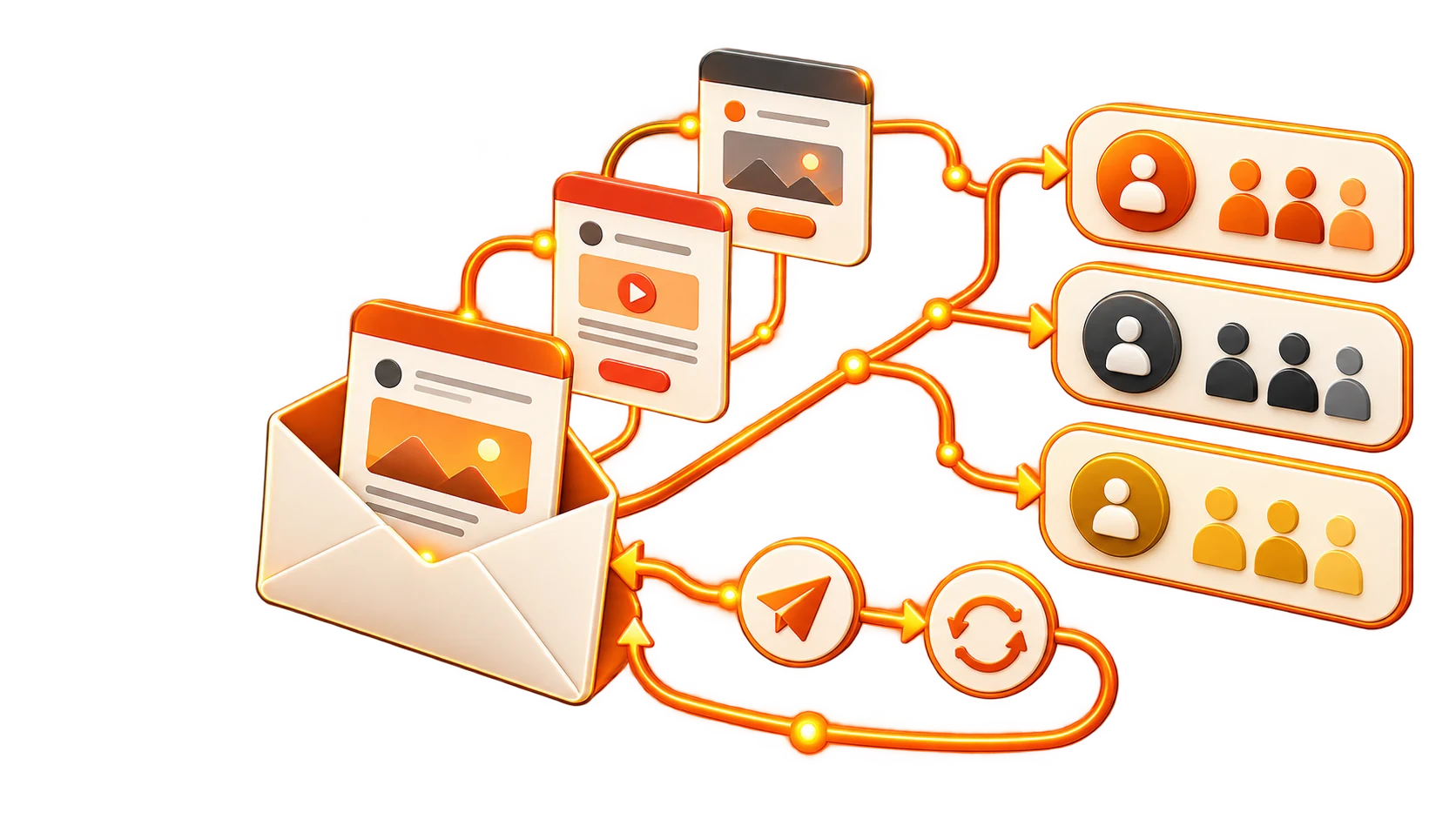
Think about the messages in your inbox. Some disappear with a quick delete; others earn a read because the subject promises something useful. That everyday behavior explains the value of email for distributing content and keeping an audience engaged. Social platforms decide visibility through algorithms, while email gives businesses a more direct route to subscribers and a useful opportunity to turn relevant content into action.
What makes email a dependable content channel, and where should a business focus its effort? The answer starts with its strengths, the tactics that make it useful and the developments shaping its next stage.
What Makes Email Effective for Sharing Content
1. A More Direct Route to Subscribers
Social reach is shaped by engagement signals and paid promotion. Email lets a business deliver content to its subscribers' inboxes directly, giving relevant messages a better chance to be seen and acted on.
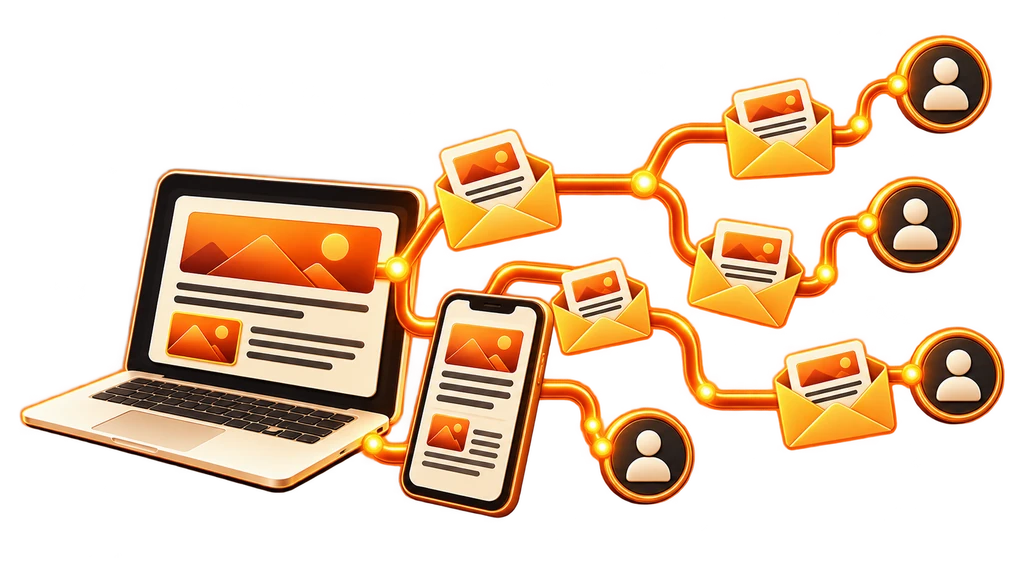
2. Relevance Through Personalization and Segmentation
Subscriber behavior, preferences and demographics can guide different messages for different people. Studies report 6x higher transaction rates from personalized emails than generic messages, illustrating the value of making content fit the recipient.
3. Stronger Engagement and Conversion Potential
HubSpot reports a return of $42 for every $1 spent on email. Unlike a passing social post, an email also stays in the inbox, giving readers the option to return when they have more time or are ready to act.
4. A Channel That Can Scale Efficiently
Automated workflows help a campaign reach more subscribers without a matching increase in manual effort. Whether the list contains 100 or 100,000 people, the same organized email process can support efficient delivery.
5. Clear Signals for Improving Content
Open rates, click-through rates and conversion reporting reveal how subscribers respond. Those insights help the business improve topics, messages and next steps rather than distribute content without learning from the result.
6. Relationships That Develop Over Time
Regular emails that provide useful information help establish credibility and keep customers engaged. The channel does not have to demand an immediate sale every time; it can steadily build trust and support retention.
7. A Way to Reconnect With Inactive Customers
A relevant reminder, personalized guide or special offer can give a dormant customer a reason to return. Thoughtful re-engagement campaigns help renew interest and bring people back to the website.
Build the Foundations of Better Email Performance
1. Make the Message Fit the Recipient
Personalized emails have reported open rates 29% higher and click-through rates 41% higher than non-personalized messages. Segmenting people by interests, purchase behavior and engagement history helps the business send content that feels relevant instead of identical messages to everyone.
Practical ways to personalize the experience:
- Include the subscriber's name in a suitable greeting or subject line.
- Separate groups by behavior, such as returning buyers and first-time visitors.
- Use purchase history to make promotions more relevant.
- Show personalized product suggestions through dynamic content.
2. Give the Subject Line a Clear Job
The subject line helps determine whether the message gets attention or is passed over. Useful practices include:
- Aim for fewer than 50 characters.
- Use a clear time-sensitive angle ("Limited Offer!") or a curiosity-led one ("You Won’t Believe This!").
- Reflect a subscriber's name or relevant preference where appropriate.
- Compare variations through A/B testing to learn what earns a response.
3. Make the Content Worth Opening
Keep the message focused, useful and easy to act on. Help readers get the value quickly by:
- Breaking key ideas into readable bullet points.
- Writing short paragraphs that maintain interest.
- Using relevant visuals, GIFs or video to support engagement.
- Closing with a direct Call-to-Action (CTA).
4. Develop an Engaged Subscriber List
A useful email strategy depends on attracting people who want to hear from the business. Ways to grow that list include:
- Offer a relevant lead magnet, such as an e-book, exclusive guide or discount code.
- Place sign-up forms and pop-ups on the website.
- Use social campaigns to invite subscriptions.
- Arrange suitable cross-promotions with creators and other businesses.
- Host webinars and share additional post-event material by email.
5. Keep the Delivery Experience Consistent
Support the campaign with a few dependable operating practices:
- Design for mobile – 85% of emails are opened on mobile devices.
- Choose a reliable sending rhythm – Weekly or bi-weekly emails work best.
- Review and test performance – Compare variations with A/B tests to improve opens and clicks.
- Follow applicable requirements – Work within GDPR and CAN-SPAM guidelines to avoid penalties.
Developments Shaping Email Content Distribution
1. More Personalization With AI
AI tools analyze user behavior, anticipate interests and automate content recommendations. That helps businesses develop messages that fit individual subscribers more closely without creating every version manually.
2. More Interactive Email Experiences
Video, surveys and other interactive elements are appearing more often in email campaigns. These formats give readers additional ways to engage with the content rather than only scan a static message.
3. Greater Attention to Mobile
As digital experiences become more mobile-focused, including search engines' mobile-first indexing, email needs to remain comfortable to read and use on smartphones and tablets.
4. A More Transparent Approach to Privacy
Changing privacy requirements make transparency and explicit subscriber consent increasingly important. Businesses need to be clear about the email relationship before sending campaigns, not treat permission as an afterthought.
5. Smarter Follow-Up Through Automation
Advanced automation makes it possible to send messages, reminders and follow-ups in response to behavior, reducing the manual effort required to keep the customer journey moving.
Keep Email at the Heart of Useful Content Distribution
New channels continue to emerge, but email remains a practical, cost-effective way to distribute content and develop customer relationships. Personalization, segmentation and automation help businesses deliver more relevant advice, sustain engagement and support consistent growth instead of relying on a single broadcast message.
For specialist support with email marketing and content distribution, BrandBlasting helps businesses build a focused strategy around audience engagement and return on investment, connecting the content with a more deliberate delivery and follow-up process.
Want to make your email marketing work harder? Speak with BrandBlasting today.
FAQs
1. How regularly should a business send marketing emails?
Weekly or bi-weekly messages work well for many businesses, though the right rhythm depends on the audience. Stay consistent without overwhelming subscribers.
2. When are marketing emails most likely to be opened?
Studies suggest Tuesday and Thursday mornings (8–10 AM) and afternoons (1–3 PM) produce the highest open rates.
3. How can I reduce the chance of messages going to spam?
Use a verified domain, avoid spam-like wording, send only to opted-in recipients and protect the reputation of the sender.
4. Which types of content suit email marketing?
Helpful articles, relevant offers, personalized recommendations, event invitations and interactive surveys are useful options.
5. Is it possible to automate email marketing?
Yes. Automation platforms support scheduled campaigns, behavior-triggered messages and audience segmentation.