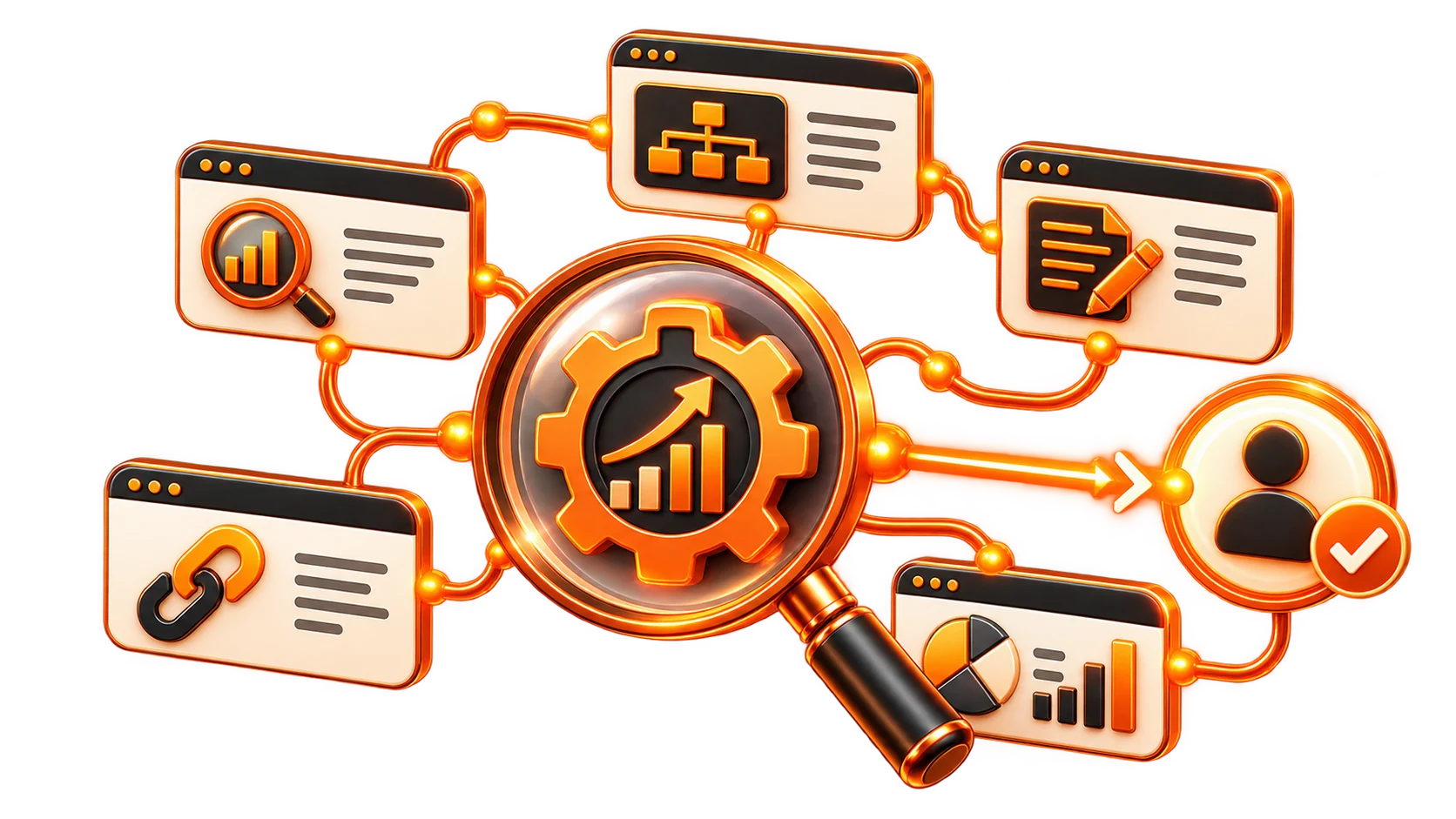
A strong product or service cannot help the people who never find it. An SEO digital marketing agency works on that visibility, helping relevant visitors discover your website and move toward becoming customers. This guide explains what an agency does, where its expertise adds value and how to choose a partner around the needs of your business rather than a list of promises.
What an SEO Digital Marketing Agency Does

An SEO digital marketing agency improves how a website appears in search engines such as Google. Its work combines keyword research, on-page improvements, off-page activity, content and technical SEO to support stronger search engine results page (SERP) visibility. The business goal is not rankings in isolation, but relevant traffic and a better opportunity to convert those visits into useful action.
Where an SEO Agency Can Add Value
Specialist Experience
An agency brings a team whose daily work centers on SEO. That means knowledge of search optimization, awareness of algorithm changes and experience across different industries. Instead of building that understanding from scratch, the business can draw on specialists who already know how the different parts fit together.
For example: Trying to navigate SEO without support can feel like entering a maze without a map. An experienced agency provides a guide through its turns, helping the business understand the route rather than guessing at every decision.
More Focus for Your Team
SEO demands sustained attention, not a one-time setup. Outsourcing gives the business more time for its core work while specialists manage the search effort. It can also avoid the hiring and training costs involved in building a complete internal SEO team.
A Strategy Built Around the Business
Businesses have different audiences, markets and objectives, so a standard approach will not fit every engagement. Agencies tailor the work to those requirements, creating a more relevant strategy instead of asking the business to fit an off-the-shelf plan.
Reporting That Makes Progress Visible
Detailed analytics help the business understand what the work is changing. Agencies monitor traffic, rankings and conversions, then report on website performance so the team can evaluate progress and see the results of the strategy more clearly.
Useful SEO Measures:
| Measure | What It Shows |
|---|---|
| Organic Traffic | Visitors who arrive through search engines |
| Keyword Rankings | Where target search terms appear in the results |
| Bounce Rate | The share of visitors leaving after a single page view |
| Conversion Rate | The share of visitors completing the intended action |
The Services Behind an SEO Strategy
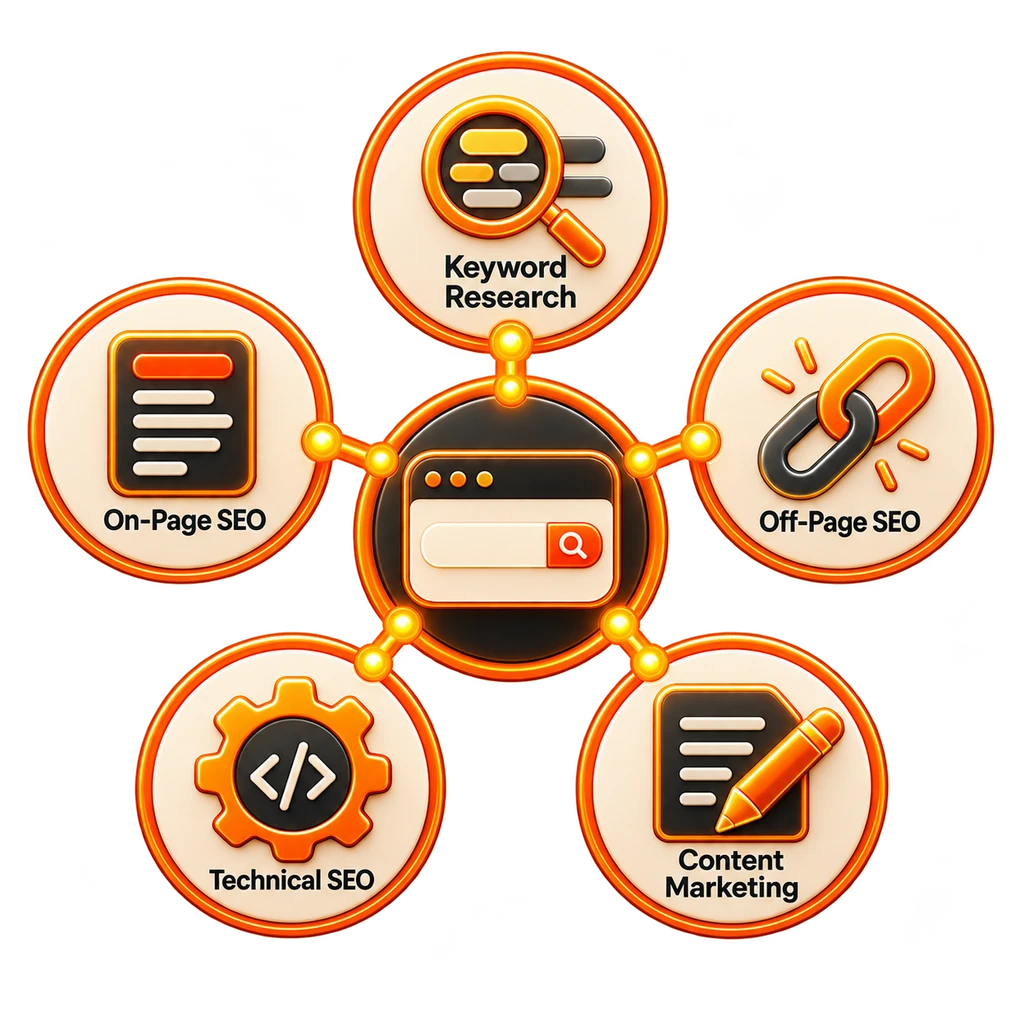
Keyword Research
Keyword research connects the strategy with the language potential customers use. Agencies use tools including Google Keyword Planner, SEMrush and Ahrefs to find relevant search demand and identify terms with useful traffic potential and lower competition, rather than choosing keywords on intuition alone.
On-Page SEO
On-page SEO improves individual pages so they can rank more effectively and attract relevant visitors. The work includes:
- Title Tags and Meta Descriptions: Write clear, compelling titles and descriptions around relevant keywords.
- Header Tags (H1, H2, etc.): Organize the page for readability and search understanding.
- URL Structure: Use descriptive, clean page addresses.
- Internal Linking: Connect related pages so visitors and search engines can follow the site.
- Content Optimization: Make content useful, engaging and relevant to the target searches.
Off-Page SEO
Off-page SEO focuses on activity beyond the website that supports authority and rankings. Common approaches include:
- Backlink Building: Obtain quality links from credible, authoritative websites.
- Social Media Marketing: Use social platforms to increase visibility and bring relevant visitors to the site.
- Guest Blogging: Contribute useful articles to other sites for exposure and backlinks.
Technical SEO
Technical SEO addresses how the website functions behind the pages. That includes:
- Site Speed Optimization: Improve loading performance.
- Mobile-Friendliness: Keep the experience effective on mobile devices.
- Secure Sockets Layer (SSL): Protect the site through HTTPS.
- XML Sitemaps: Help search engines discover and crawl the website.
Content Marketing
Useful content gives both people and search engines something worth discovering. An agency can create and promote articles, blog posts, infographics, videos and other material that attracts the audience, answers its questions and supports a conversion.
How to Assess an Agency Before You Commit
The right partnership matters as much as the list of services. These checks help make the choice more deliberate:
Decide What Success Means
Set the objective before starting the search. Are you trying to grow organic traffic, improve target rankings or increase conversions? A clear goal makes it easier to identify an agency whose approach matches what the business actually needs.
Look for Evidence of Relevant Work
Ask for case studies or client feedback that demonstrate the agency's ability to deliver. A track record gives you something concrete to assess beyond the confidence of its pitch.
Explore How They Adapt
During an initial conversation, ask about current SEO practices and how the team responds to algorithm changes. An effective agency keeps its knowledge current and can explain how that learning affects the strategy.
Check the Working Relationship
Choose a team that explains decisions clearly, shares regular updates and responds to questions. Communication is part of the service, not an optional extra once the contract is signed.
Understand the Price and Value
Cost matters, but it should not decide everything. Look for transparent pricing, a clear scope and a credible explanation of the value the business receives for its investment.
Why SEO Rewards a Longer-Term View
SEO is closer to a marathon than a sprint. A sustained approach can create several important benefits:
Visibility That Can Keep Contributing
Paid traffic depends on continued advertising spend. Strong organic rankings can keep attracting visitors without paying for each visit, allowing the value of earlier SEO work to continue after the initial effort.
A More Useful Website
SEO improvements are not only for search engines. Better structure, faster loading and clearer content also help visitors find what they need and enjoy a more straightforward experience.
Stronger Brand Confidence
A visible position in search results can strengthen credibility. People tend to place more trust in websites they find on the first page, making search presence part of how the brand is judged.
A Better Competitive Position
A well-developed SEO strategy can help your business move ahead of competing sites and establish a stronger leadership position in its market.
Efficient Long-Term Marketing
By bringing targeted organic visitors to the website, SEO can offer a cost-effective alternative within the digital marketing mix and support a stronger return on investment over time.
Choose a Partner for the Whole Journey
An SEO digital marketing agency brings the experience and specialist knowledge needed to navigate search more confidently. Its contribution can extend from better visibility and relevant organic traffic to stronger conversion opportunities. The value comes from connecting those outcomes with a clear business goal, not treating a ranking as the finish line. SEO develops over time, and the right agency should help you understand that journey, make informed choices and keep improving the parts that matter.
FAQs
How do on-page and off-page SEO differ?
On-page work improves elements within the site, including content, metadata and internal links. Off-page work develops signals beyond it, such as backlinks and social activity, to support authority and rankings.
When can a business expect to see SEO progress?
Significant results commonly take 3 to 6 months. Competition, keyword difficulty and the quality of the work all affect that timeline, so SEO needs a longer-term commitment.
Can I manage SEO myself instead of using an agency?
You can learn and apply basic SEO. More advanced execution often benefits from an agency's tools, experience and specialist knowledge, particularly when the business needs a broader strategy.
Which measures do agencies use to assess success?
Organic traffic, target rankings, conversion rates and bounce rates are common measures. Regular reporting should show how those signals are changing and what they say about the strategy.
Can SEO be completed as a one-time task?
No. Search algorithms continue to change and competitors keep working on their own visibility. Ongoing optimization helps maintain and improve the position of the website.
Use these principles to assess an agency's role, judge the fit of its approach and choose support that helps your business make practical progress in search.