
Social media is part of everyday life, but its value for businesses goes well beyond personal conversations. It supports marketing, brand recognition and customer relationships. Managing it well takes expertise, time and dependable execution. That is where social media management services packages help. They bring the recurring work together so a business can maintain an effective social presence without managing every task itself.
What Does a Social Media Management Package Include?
Social media management services packages combine agency support around a business's social presence. The scope commonly includes creating content, planning publication, scheduling posts, engaging the audience, analyzing performance and reporting on the work.
Why Choose a Managed Social Media Package?
A suitable package brings structure and specialist support to the channel. The main benefits include:
- Specialist Knowledge: Work with professionals who understand how the different social platforms operate.
- More Time for the Business: Keep your attention on other priorities while social activity is handled.
- A Consistent Presence: Maintain regular publishing and meaningful interaction with followers.
- Performance Insight: Use detailed reporting to understand what your social activity is producing.
- Flexible Scope: Increase or reduce the package as the requirements of the business change.
The Main Parts of a Social Media Package
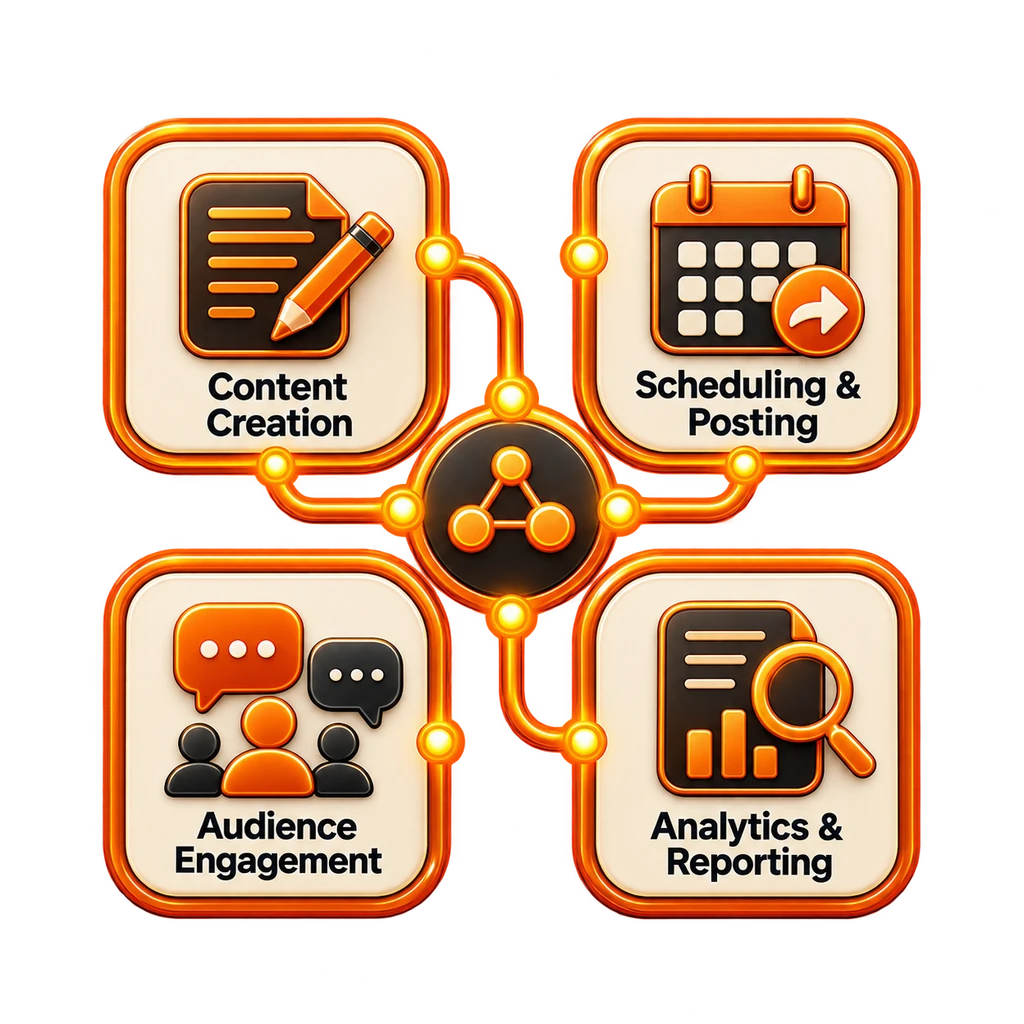
The strongest packages connect several recurring disciplines. Each contributes to a more useful and coherent online presence.
1. Producing the Content
An effective social presence needs content worth noticing. Look for support across formats such as:
- Visual Design: Create appealing graphics and images that suit the brand.
- Video Creation: Develop video content that gives the audience a reason to watch.
- Written Copy: Write relevant, persuasive text for social posts and advertising.
2. Planning and Publishing
A dependable publishing rhythm helps keep the profile active. Packages often cover:
- A Content Calendar: Plan which content will be published and when it should appear.
- Scheduled Publication: Use scheduling tools to prepare posts in advance and publish on time.
3. Managing Audience Conversations
Relationships and loyalty develop through interaction. Engagement support may include:
- Comment Responses: Reply to people who engage with your posts.
- Direct Conversations: Manage questions and enquiries received through direct messages.
- Community Support: Build and maintain an active community connected to the brand.
4. Analyzing and Reporting
Measurement shows whether the strategy is contributing. Look for reporting that addresses:
- Engagement Measures: Track relevant reactions, shares, comments and other interactions.
- Website Visits: Understand how social activity brings people to your website.
- Business Conversions: Measure the leads or sales connected to the social work.
What the Right Package Can Improve
With those components working together, the value goes beyond simply keeping the account busy.
1. Stronger Brand Recognition
Regular publishing keeps your business visible, while useful content gives more people a reason to notice it. Combine that consistency with genuine interaction and your brand can become more recognizable to a wider audience.
2. Better Customer Relationships
Social channels allow direct conversations with customers. Timely replies and personal, relevant engagement help people feel heard and can strengthen both satisfaction and loyalty.
3. A Better-Informed Strategy
Detailed analytics show which approaches are working and which are falling short. Use those insights to refine the plan and make future decisions with stronger evidence.
4. More Cost-Effective Marketing
Social marketing can offer good value compared with traditional marketing approaches. Well-managed campaigns create opportunities to improve the return on the resources you invest.
5. More Efficient Use of Time
Outsourcing the recurring management work frees valuable time for the core functions and decisions that need your attention.
Choose a Package Around Your Priorities
The right scope depends on the business rather than the length of a feature list. Use these questions to compare your options:
1. Be Clear About the Goal
Decide what social media should contribute: more awareness, deeper engagement, stronger lead generation or another defined outcome. That choice should shape the package.
2. Set a Practical Budget
Know what you can commit to social media management. Packages cover different price ranges, so compare the scope with the investment your business can sustain.
3. Check the Actual Inclusions
Read what is included rather than assuming. The scope should cover the work you need, from producing content to understanding its performance.
4. Review the Provider's Reputation
Read reviews and testimonials from other businesses. They can help you understand whether the provider communicates reliably and delivers the kind of support you need.
Examples of Managed Social Media in Practice
The following examples show how different package choices can support different business requirements.
Example 1: An E-Commerce Business
Challenge: An ecommerce business faced weak social engagement alongside falling sales.
Solution: It selected a comprehensive social media management package combining content production, audience interaction and detailed performance analysis.
Results: After six months, engagement had risen by 75% and sales had increased by 50%.
Example 2: A Local Restaurant
Challenge: A local restaurant needed more visibility and more customers through the door.
Solution: It chose regular publishing supported by visual content, including professional photographs and videos of its dishes.
Results: Foot traffic increased by 40%, with a substantial rise in online reservations as well.
Example 3: A Technology Startup
Challenge: A technology startup wanted to establish awareness and generate enquiries.
Solution: Its package focused on targeted advertising alongside community management.
Results: Within three months, brand mentions increased by 60% and lead generation grew by 30%.
Compare the Package Levels
| Feature | Basic Package | Standard Package | Premium Package |
|---|---|---|---|
| Content Creation | Limited | Standard | Extensive |
| Posting Frequency | 3 times/week | Daily | Multiple times/day |
| Audience Engagement | Basic | Moderate | High |
| Analytics & Reporting | Monthly | Bi-weekly | Weekly |
| Advertising Budget | None | Moderate | High |
| Price Range (per month) | $500 - $1,000 | $1,000 - $2,500 | $2,500+ |
Choose Support That Makes Social More Useful
A well-matched social media package brings together the people, tools and ongoing resources needed to build your online presence. It helps you stay connected with the audience while working toward a clear marketing objective. From a small business to a larger organization, the useful choice is the package that fits your needs and gives the channel a dependable operating rhythm.
FAQs
Q1: Which inclusions matter in a social management package?
A1: Check for content creation, publication scheduling, audience engagement and analytics. Then confirm the package fits your goals and the budget available.
Q2: How frequently should my business publish social content?
A2: The right rhythm varies, but it needs to be consistent. Many businesses use daily publishing or several posts each week.
Q3: Can a social management package include paid advertising?
A3: Yes. Many packages include paid social campaign management to extend reach and attract a more targeted audience.
Q4: How do I know whether the social activity is working?
A4: Monitor engagement, website visits and conversions through analytics. Regular reporting should help you understand the strategy's contribution.
Q5: Can a small business benefit from managed social media?
A5: Yes. It can help a smaller business build recognition, develop customer relationships and support growth despite limited internal resources.