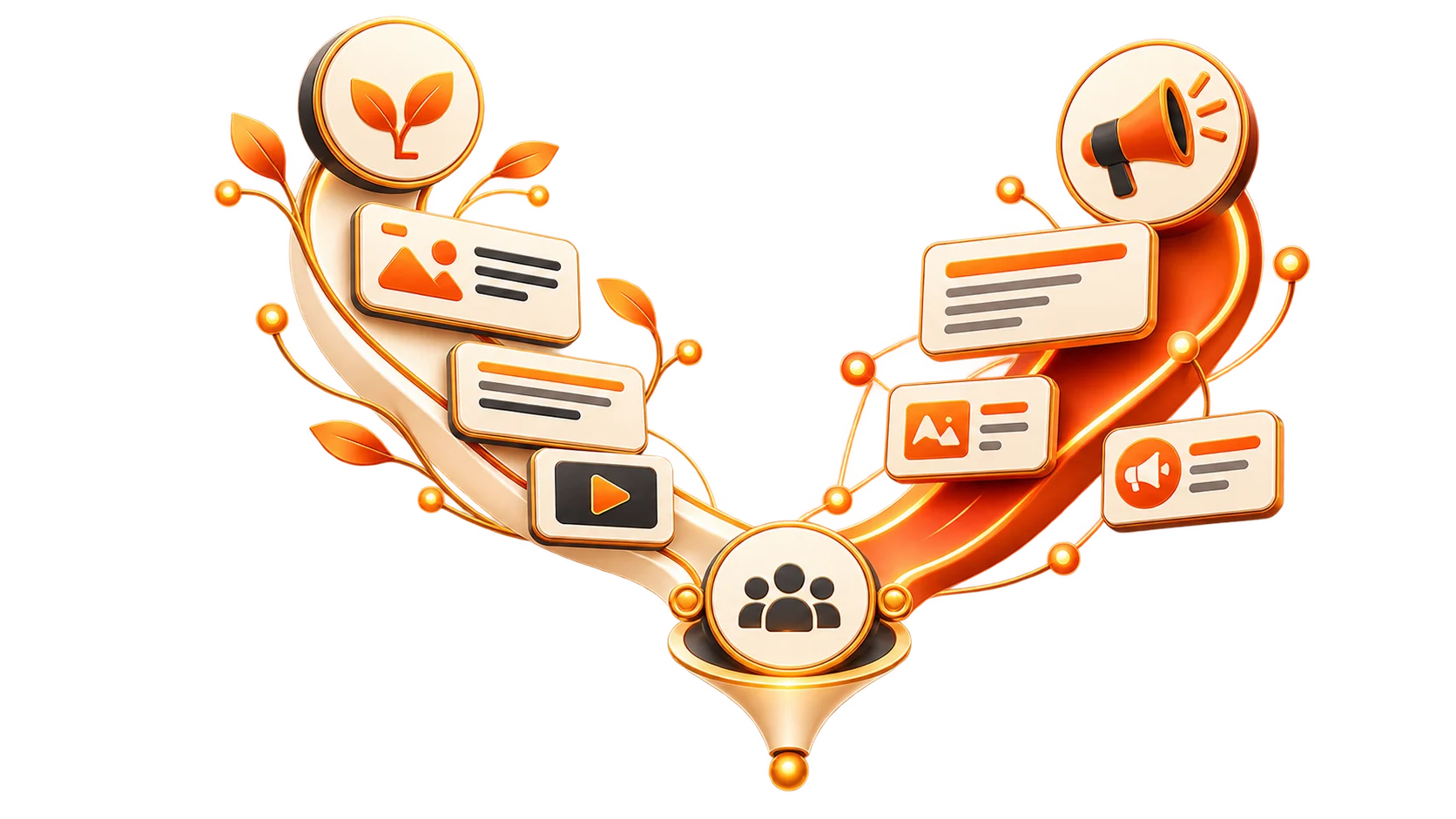
Picture two stalls in a busy street market. One owner wins people over with useful advice, samples and genuine conversation. Another draws a crowd with a loudspeaker, bright discount signs and banners announcing, "Buy Now!" That contrast captures organic vs inorganic marketing strategy: one earns trust over time, while the other pays to put the offer in view immediately.
Which approach does your brand need? More importantly, how can they work together? Understanding their strengths and trade-offs helps you choose a growth strategy around your business, rather than chasing whichever channel makes the most noise.
Organic Marketing: Earn Attention Over Time
Organic marketing grows visibility without paying directly for every placement. Instead of buying access to an audience, you publish useful content, contribute expertise and give people a reason to discover and return to your brand.
Common examples include:
- Blog articles
- Organic social media posts
- SEO (Search Engine Optimization)
- Email newsletters
- Customer referrals and word-of-mouth
The foundations are trust, engagement and long-term value. Think of the work as tending a garden: the benefits build as consistent care helps each piece of content take root.
What Organic Marketing Does Well
- Lower Advertising Spend: Build visibility without a large placement budget.
- Credible Expertise: Useful content that ranks demonstrates what your team knows.
- Lasting Returns: A strong article can keep attracting relevant visitors for years.
- Closer Community: Create space for genuine conversations with your audience.
The Trade-Offs of Organic Growth
- Time to Build: Momentum does not arrive overnight.
- Consistent Effort: Neglected content and irregular updates can slow progress.
- Search Competition: Earning visibility in Google requires more than publishing alone.
Inorganic Marketing: Pay to Reach the Audience
Inorganic marketing, also called paid marketing, buys visibility for your brand, message or offer. It can put the right campaign in front of people quickly, much like switching on a spotlight rather than waiting for a crowd to gather.
Typical paid channels include:
- Google Ads
- Facebook and Instagram Ads
- Paid influencer partnerships
- Sponsored content
- Display and banner advertising
Where organic marketing cultivates a garden, paid marketing creates the immediate visibility of a fireworks display: direct, noticeable and built for attention now.
What Paid Marketing Does Well
- Quicker Traffic: A campaign launched today can begin bringing visits tomorrow.
- Focused Targeting: Reach audiences using demographic, interest and behavior signals.
- Budget-Led Reach: Increase exposure by putting more investment behind a campaign.
- Visible Performance: Use real-time reporting to review and improve results.
The Trade-Offs of Paid Growth
- Rising Costs: Spending can accelerate quickly without a clear strategy.
- Short-Lived Traffic: Stop the campaign and its paid traffic stops with it.
- Creative Fatigue: Repeated promotional messages eventually lose their appeal.
- Credibility Barrier: People may be more cautious about a paid message.
Organic and Paid Marketing: The Main Differences
| Consideration | Organic Marketing | Inorganic Marketing |
|---|---|---|
| Investment | Lower cash cost; more time and effort | Advertising budget required |
| Time to Impact | Gradual momentum | Immediate visibility |
| Staying Power | Benefits can continue over time | Impact comes in paid bursts |
| Buyer Trust | Built through useful content | More visibly promotional |
| Reach Control | Less direct control | Controlled through targeting |
| Measurement | ROI can be harder to attribute | Easier to track and adjust |
| Growth Lever | Quality and consistency of content | Available campaign budget |
| Main Strength | Brand, SEO and engagement | Lead generation and sales activation |
When to Prioritize Organic Marketing
Organic work is particularly useful when you want to:
- Establish a lasting brand presence
- Demonstrate expertise and leadership
- Develop an engaged community
- Improve visibility in search
Choose it when you are investing in the longer-term position of the business.
A Practical Starting Point: Connect helpful articles with consistent social activity and SEO improvements to develop an organic pipeline.
When to Prioritize Paid Marketing
Paid campaigns are useful when the business needs to:
- Generate traffic or leads quickly
- Promote an event or time-sensitive offer
- Test a product or market without a long wait
- Reconnect with visitors who left without converting
A Practical Starting Point: Begin with a controlled budget, measure the journey and expand what performs. Avoid "spray and pray" spending.
Make Organic and Paid Work Together
The stronger strategy is rarely one channel against the other. It is a deliberate combination.
Build that connection in four ways:
- Amplify Proven Content: Put paid support behind organic articles or posts that already resonate.
- Retarget Engaged Visitors: Follow up with people who discovered the brand through organic content.
- Share Campaign Learning: Let paid insights guide organic content, and use organic feedback to improve ads.
- Balance the Effort: Allocate 60-70% of your effort to organic work, with the remainder supporting focused paid campaigns.
Like combining endurance and strength training, the mix develops staying power and a more immediate push.
The Numbers Behind the Comparison
According to HubSpot:
- 70% of marketers consider SEO more effective over the long term than paid search.
- Paid advertising costs on Google and Meta are increasing year over year by 10–15%.
- Organic content generates 3x more leads per dollar than paid advertising (Content Marketing Institute).
These figures are another reason to look beyond a single-channel answer.
Build a Balance, Not a Rivalry
For a business serious about growth, the organic vs inorganic marketing strategy question is about complementary roles. Treat the approaches as teammates with different strengths, rather than competing alternatives.
Organic marketing supplies steady, trust-building momentum. Paid marketing adds a faster, more concentrated burst when the business needs one.
Create content people value. Amplify it with relevant ads. Measure the response and improve the mix.
A full-service digital agency such as BrandBlasting can help translate those choices into a tailored plan, balancing organic and paid activity while you stay focused on running the business.
FAQs
1. Should I choose organic marketing over paid marketing?
Not automatically. Organic builds trust and lasting visibility; paid supports quicker demand. Many businesses benefit from using both for different jobs.
2. When can organic marketing begin producing meaningful results?
Timing varies, but SEO and content work commonly need 3–6 months before solid results emerge.
3. Is paid marketing realistic for a small business?
It can be. Start with a manageable budget, test a focused campaign and increase investment based on its performance.
4. Which channels should I consider for paid marketing?
Google Ads, Facebook/Instagram Ads, LinkedIn for B2B and YouTube are useful options; audience fit should guide the choice.
5. Can I stop advertising when organic traffic improves?
You do not have to. Ads can add conversions and reinforce organic growth. The aim is a useful partnership, not a direct replacement.