
Advertising costs keep climbing while more brands compete for the same attention. Paid campaigns can bring visits quickly, but that traffic ends when the budget stops. Organic marketing offers a different foundation: lasting visibility, earned trust and stronger brand authority without having to buy every introduction.
Making that work in 2025 still requires a plan. Algorithms change and customers' habits evolve, so the channels need to support one another. This guide explains how to build awareness, attract leads and support sales without making paid ads the only source of demand.
Understand Organic Marketing
Organic marketing describes ways to attract customers over time without paying to promote each message. It develops an audience through useful content, SEO and genuine interaction rather than relying on advertisements.
| Organic Marketing | Paid Marketing |
|---|---|
| Long-term visibility without a media fee | Requires an ongoing advertising budget |
| Develops credibility and brand trust | Moves quickly, but stops with the spend |
| Uses content, SEO and audience relationships | Uses PPC and direct paid promotion |
| Builds stronger customer connections | Prioritizes more immediate conversion |
Why Organic Growth Deserves Investment
- Trust and Authenticity: 81% of consumers place more trust in organic content than advertising.
- Longer-Term Value: Organic traffic can keep arriving after the foundations are built, unlike paid placements.
- Useful to the Platforms: Search and social systems reward information that people find valuable and engaging.
Start with the following organic marketing priorities for 2025.
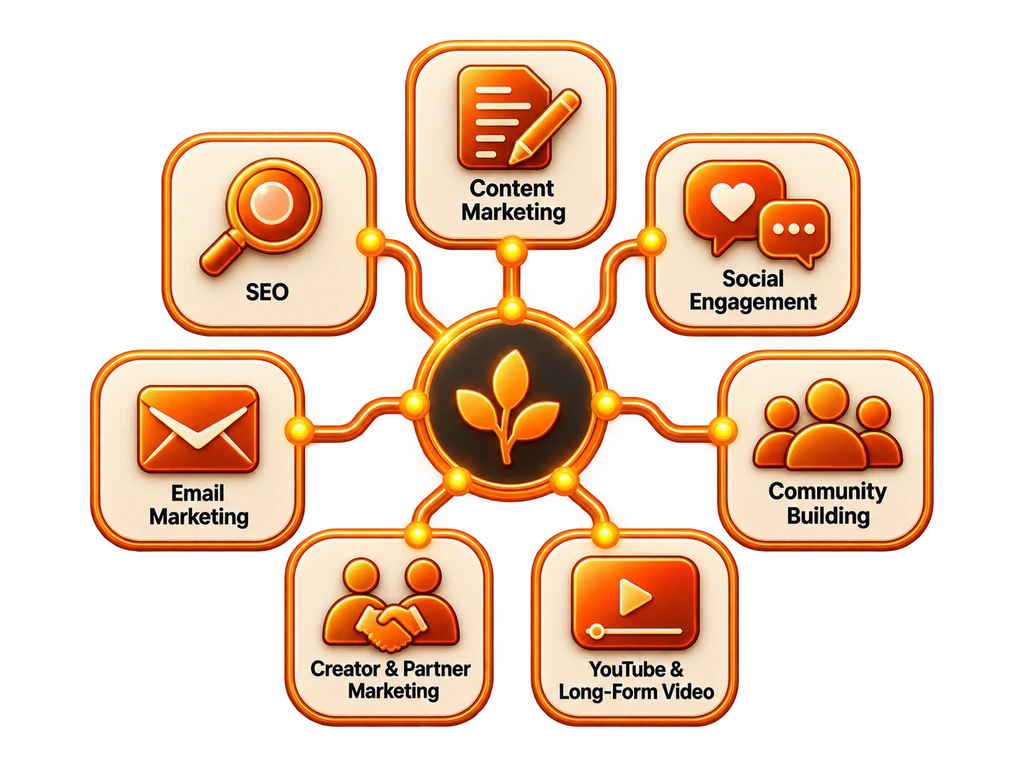
1. Make Content the Foundation of Organic Growth
Content marketing can be the most effective organic growth approach because it helps attract, teach and convert customers without buying ads. Publishing consistently useful material develops expertise in the audience's eyes, builds confidence and supports stronger search performance.
Create Information Worth Discovering
✅ Blog Posts – Publish detailed, informative articles that answer the audience's questions. Focus on long-form content (1,500+ words) that gives readers practical solutions to real problems. Include SEO keywords naturally, link to useful internal and external information, and make the explanation easy to scan with headings, images and lists.
✅ Videos & Reels – Video has become the most consumed format online. Short formats on Instagram Reels, TikTok and YouTube Shorts attract stronger engagement. Use how-to videos, behind-the-scenes clips, product demos, or customer testimonials to create a more immediate connection with the audience.
✅ Infographics & Carousels – Visual material can be 94% more engaging than text by itself. Infographics clarify complicated data, while LinkedIn and Instagram carousels invite people to scroll through multiple slides, increasing interaction and time with the content.
✅ E-books & Case Studies – E-books, whitepapers and case studies can serve as lead magnets for building the email list. A well-explained customer success story gives the offer more credibility and can improve conversion.
💡 Pro Tip: Storytelling makes information more memorable. Facts explain an idea; a story can connect emotionally through a personal experience, customer journey or recognizable real-life example.
A Practical Content Checklist
| ✅ The Task | 🔥 Its Purpose |
|---|---|
| Research topics people care about | Keep the material relevant to audience demand |
| Use relevant search terms | Support discovery in search results |
| Include useful graphics and images | Encourage interaction and sharing |
| Write in a natural, conversational voice | Make the explanation approachable and clear |
2. Use SEO to Earn Search Visibility Without Ads
Search Engine Optimization (SEO) forms a central foundation of organic marketing. It helps the website compete more effectively in Google and other search engines so prospective customers can find the business without a paid placement. Strong rankings can then bring a continuing stream of free visits.
SEO Priorities for 2025
✅ Keyword Research – Choose high-intent keywords that reflect what people actually want. Google Keyword Planner, SEMrush and Ahrefs help you compare demand with competition and identify more practical opportunities.
✅ On-Page SEO – Improve each page through:
- Title Tags – Use relevant keywords and give the reader a reason to notice the page.
- Meta Descriptions – Explain the page and next action in 155-160 characters.
- Headings (H1, H2, H3) – Give the content a clear order and include the main search terms.
- Internal Linking – Connect useful, related pages to improve navigation and ranking.
✅ Quality Backlinks – Google values websites with strong backlinks from credible publishers. Create opportunities through:
- Guest contributions to respected websites.
- Work with relevant industry leaders and influencers.
- Publishing high-value, shareable content that naturally gives others a reason to reference it.
✅ Mobile Optimization – More than 60% of searches happen on mobile. Mobile-friendly websites rank more strongly, so check the following:
- Keep pages fast, ideally loading in under 3 seconds.
- Responsive design that works across devices.
- Readable type and obvious calls to action.
Compare SEO With Paid Search
| Feature | SEO (Organic Search) | PPC (Paid Search) |
|---|---|---|
| Cost | No traffic fee, but work is required | Ongoing pay-per-click budget |
| Longevity | Traffic that develops over time | Traffic stops when the budget ends |
| Credibility | Confidence built over time | Some users distrust advertising |
| Click-Through Rate (CTR) | Stronger for organic results | Lower for paid results |
💡 Pro Tip: SEO needs time, but established rankings can bring consistent, high-quality traffic without continuing advertising costs.
3. Develop a Social Audience Through Genuine Interaction
Social platforms reach millions of active users daily, making them important channels for an organic plan. To support growing without paid ads , understand that platforms prioritize engagement (likes, comments, shares, and saves) . Encourage real conversations and give the audience reasons to respond, helping extend reach without paying to promote each post.
Create a More Active Organic Social Presence
✅ Keep a Regular Publishing Rhythm – Consistent posting is crucial to visibility. Aim for at least 3-5 times per week to maintain an active profile and give people regular reasons to return.
✅ Invite Responses and Sharing – Responses tell the platform the content matters. Use caption questions, polls and relevant provocative viewpoints to start useful conversations.
✅ Choose Hashtags Carefully – Hashtags support discovery, but excessive tagging can reduce reach. Choose 3-5 highly relevant hashtags rather than adding 30 broad, generic ones.
✅ Use Stories and Live Formats – Live videos and Stories can receive higher priority in feeds because they encourage real-time engagement. Apply them to behind-the-scenes content, questions and answers or product launches.
Match the Social Platform to the Format
| Platform | A Useful Format | An Approach to Growth |
|---|---|---|
| Reels, Stories | Short videos, interactive polls and collaborations | |
| B2B networking | Expert perspectives, longer articles and professional conversations | |
| TikTok | Viral engagement | Creative stories, trends and participatory challenges |
| YouTube | Evergreen video content | Detailed tutorials, reviews and educational resources |
💡 Pro Tip: User-generated content (UGC) helps audiences engage. Invite people to show how they use the offer, then feature suitable posts on the profile.
4. Use Email to Keep the Relationship Growing
Organic activity is not only about bringing new customers in. It also means giving them reasons to stay connected. Email is one of the strongest channels for nurturing interest, developing trust and turning a first purchase into a relationship with long-term customers.
Build the List Through Useful Invitations
✅ Give People a Relevant Lead Magnet – An email address deserves a worthwhile exchange. Offer a compelling reason to subscribe , such as:
- A free e-book
- Access to exclusive discounts
- A free course or webinar
- A practical downloadable template or checklist
✅ Prepare a Welcome Sequence – A subscription is the start of a relationship. Instead of leaving the person waiting, prepare an automated welcome email series to:
- Introduce the story behind the brand
- Share relevant advice or insight
- Offer a reason to make the first purchase
✅ Send Useful Weekly Emails – Avoid a stream of sales promotions. Aim to balance the material with:
- Changes and news from the industry
- Relevant stories of success
- Advice people can apply quickly
- Personal stories that develop the brand relationship
💡 Pro Tip: Personalized email can increase open rates by 26%. Use names where suitable, segment the list and match the information to subscribers' interests.
5. Create a Community That Advocates for the Brand
Strong brands do not only sell products; they develop communities. An engaged community creates brand advocates who can introduce your business without paid promotion by sharing their experience and recommending it to others.
Build a Place for Ongoing Participation
✅ Facebook Groups – Start niche groups around an industry subject where people can discuss changes, ask questions and receive useful advice. That activity develops trust and loyalty.
✅ Exclusive Discord/Slack Channels – Give VIP customers or followers a private place to speak with the brand, exchange ideas and meet others with similar interests.
✅ User-Generated Content (UGC) – Invite genuine customer photographs, videos and testimonials. Sharing them on social channels or the website develops authentic social proof.
Why a Community Supports Growth
| The Community Benefit | How It Contributes |
|---|---|
| Customers introduce the brand | Word of mouth remains a powerful form of marketing |
| More sustained interaction | People develop a sense of belonging and remain connected to the business |
| Stronger confidence and credibility | Genuine social proof helps prospective customers feel more confident about choosing the business |
💡 Pro Tip: The strongest marketing can feel like a natural relationship. When a community is working, customers can recommend the brand without being asked.
6. Reach Relevant Audiences Through Creators and Partners
Influencer and partner relationships are useful organic approaches for reaching audiences that already exist without buying ads. An endorsement from a relevant, trusted expert or creator can provide immediate credibility while introducing the brand to more people.
Build Partnerships That Fit the Audience
✅ Work With Relevant Micro-Influencers – Larger creators can charge substantial fees, while micro-influencers (1K–50K followers) may collaborate at little or no cost. Their highly engaged audiences often regard the content as more authentic.
✅ Contribute to Blogs and Podcasts – Guest articles and relevant podcast appearances introduce your expertise to a new audience. The opportunity helps establish authority and brings organic traffic to the website.
✅ Create Joint Promotions With Complementary Brands – Find complementary businesses for shared giveaways, events or promotions. A relevant partnership can introduce you to another audience while giving both groups something useful.
✅ Affiliate Partnerships – Set up an affiliate program through which creators promote the offer for a commission. Over time, they can become ongoing organic promoters of the brand.
💡 Pro Tip: Keep the partnership authentic. Choose people whose values genuinely fit the brand. Audiences quickly recognize inauthentic promotions that do not feel credible.
7. Build Lasting Value With YouTube and Longer Video
YouTube is more than a social channel: it is the second largest search engine in the world after Google. Longer videos can help a business compete for high-intent keywords, establish credibility and keep earning organic visits over time.
Use Video as Part of the Organic System
✅ Focus on Evergreen Information – Build longer-term usefulness through:
- Step-by-step guides and practical tutorials
- Industry perspectives and expert interviews
- Product explanations and customer case studies
- The brand story and a behind-the-scenes view
✅ Make Videos Easier to Find – Like a written article, a video benefits from SEO optimization:
- Place targeted keywords in the title and description.
- Include timestamps & chapters to make navigation easier.
- Create compelling thumbnails that encourage a stronger click-through rate (CTR).
✅ Make Use of YouTube Shorts – Short videos of 60 seconds or less are favored by YouTube’s algorithm and can help newer channels find an audience sooner.
✅ Adapt the Video Into Other Formats – One longer video can also provide material for:
- Written blog articles
- Short clips for Instagram and TikTok
- Podcast content
- Email newsletter material
💡 Pro Tip: Build a dependable publishing rhythm. Publishing one high-quality video per week can contribute to sustained growth over the longer term without purchasing advertising.
Make Organic Marketing Part of the Plan for 2025
Organic marketing offers more than a passing tactic. It is a sustainable foundation for visibility, authority and a loyal audience without spending thousands on paid placements.
Keep the Main Priorities Connected:
✅ Organic activity develops credibility and trust over time.
✅ Content, SEO, social interaction, email and community reinforce one another.
✅ Consistent execution and genuine engagement make the difference.
Start putting the most relevant approaches into practice and use them to build a more durable source of demand.
FAQs
1. What counts as organic marketing?
It attracts customers without paid advertising through methods such as SEO, content, social interaction, email and community development.
2. When should organic marketing start showing progress?
Consistent work and patience are important. Noticeable improvements commonly begin in 3-6 months, with longer-term growth developing over 12+ months.
3. Does SEO still matter in 2025?
Yes. It remains important for Google visibility, organic visits and credibility without depending on advertising spend.
4. Should organic activity replace paid campaigns?
Organic work develops lasting growth, while paid advertising can add faster visibility. Using them together can provide the strongest overall impact.
5. Which social platform is best for organic growth?
Choose according to the audience. Instagram and TikTok suit visual formats, LinkedIn is useful for B2B connections and YouTube supports longer, evergreen video content.