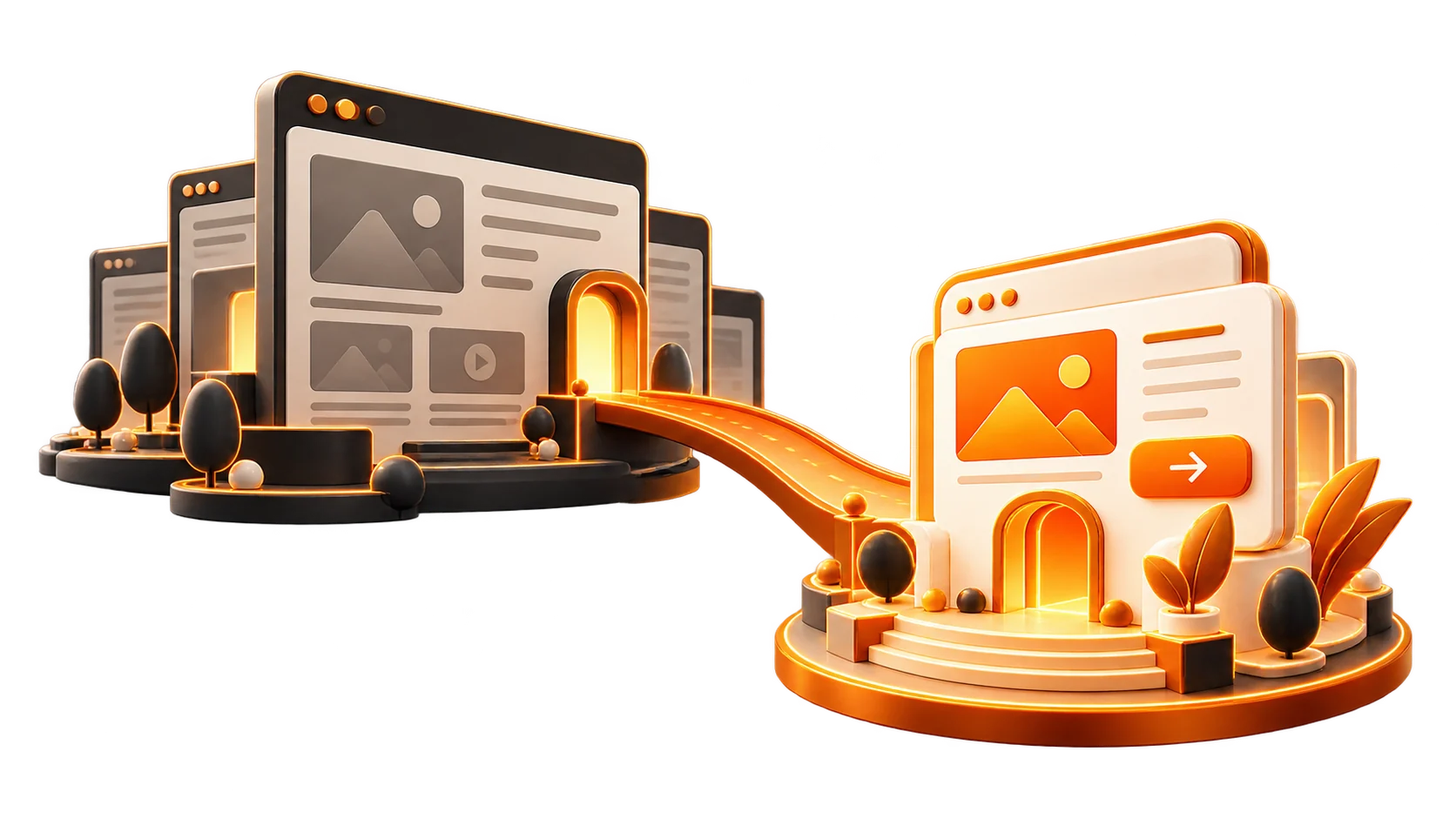
Across a busy digital landscape, brands need better ways to attract, inform and convert the right people. Microsites provide a focused format for campaign-led experiences that sit apart from the main company website.
Rather than covering everything a business does, a microsite concentrates on one purpose, such as a product launch, an event or an interactive experience. That clear focus in the design and content helps visitors stay involved in the experience and makes the format a useful part of a modern marketing strategy.
At BrandBlasting, we build microsites focused on conversion to encourage engagement, raise awareness and support action. This guide examines 7 distinctive microsites, the experience behind each one and the lessons a business can take from its approach.
Understand What a Microsite Does
A microsite is a small, focused website built around one campaign, product or interactive idea. Unlike the full company website, it stands independently, commonly using a separate domain or subdomain.
Why a Brand Might Choose a Microsite
✅ One clear message – Visitors can stay with the campaign's topic instead of navigating the broader content of a large website.
✅ Room for interaction – The format gives brands space to explore stories, game-like elements and multimedia.
✅ Targeted search visibility – With suitable optimization, microsites can earn search visibility around specific keywords.
✅ A clearer conversion path – A considered microsite guides visitors toward one intended action, such as a sign-up, purchase or share.
The following discussion explores 11 standout microsite approaches, how they work and what they can teach a business planning its own experience.
1. BrandBlasting Website Performance Analyzer
📌 The Microsite's Purpose: Help a business assess and improve its website's performance
At BrandBlasting, we recognize the importance of a website that performs well for search visibility, conversion and the visitor experience. The BrandBlasting Website Performance Analyzer was created to help businesses assess and improve their site's speed, security, mobile behavior and usability.
A business can lose visibility and returning visitors through slow pages, difficult mobile layouts and SEO problems. The BrandBlasting Website Performance Analyzer addresses those areas through a detailed website audit that identifies priorities and supplies recommendations supported by AI for the site being reviewed.
The BrandBlasting approach uses AI-supported analysis to look beyond basic site checks, covering:
- SEO Analysis – Review metadata, backlink signals and keyword optimization.
- Page Speed Insights – Examine loading performance and identify improvements.
- Mobile-Friendliness Check – Assess how well the website works on smartphones and tablets.
- Security Assessment – Highlight vulnerabilities and HTTPS concerns.
- User Experience (UX) Review – Identify design problems that affect engagement.
As a free tool, it gives business owners, marketers and developers a starting point to improve website performance, strengthen visibility and support conversions.
Why the Approach Works:
✅ AI-supported improvement recommendations focus attention on search and speed.
✅ Reports shaped by the website turn user input into practical areas for improvement.
✅ A straightforward interface makes the findings easier to understand and act on.
✅ A broad audit reviews several connected aspects of performance.
✅ Useful findings help businesses strengthen their digital presence.
2. Listening Together by Spotify
📌 The Microsite's Purpose: Show how music connects listeners around the world
Spotify’s Listening Together uses a data-led experience to make visible the connections music creates between people worldwide.
Its centerpiece is a 3D globe updated in real time. Visitors can watch pins appear together when two people play the same track simultaneously in different locations. The considered visual experience brings Spotify's music-led connection between people into focus.
Visitors can explore the experience in several ways:
- Select live pins to discover the track connecting two listeners.
- Review live listening patterns across different countries.
- Discover tracks and artists attracting attention internationally.
- Share the experience through social media and extend organic engagement.
The result is an interactive, visually absorbing experience that has become one of Spotify's standout brand-storytelling campaigns.
Rather than using the microsite to push a sale, the experience reinforces Spotify's brand identity through the emotional connection people already have with music.
Why the Approach Works:
✅ A participatory experience gives people a reason to keep exploring.
✅ Live data made visible turns listening behavior into a feeling of connection.
✅ A distinctive storytelling format demonstrates music's ability to connect people.
✅ Natural opportunities to share help Spotify reach additional audiences.
✅ The experience strengthens positioning without relying on a direct sales message.
3. My Creative Type by Adobe
📌 The Microsite's Purpose: Help people understand their creative personality
Adobe’s My Creative Type is an interactive quiz informed by psychology, helping people explore their creative identity. Rather than presenting a conventional personality questionnaire, it uses artistic motion, reflective questions and game-like elements to build a more engaging experience.
The quiz takes visitors through a sequence of visually expressive questions supported by animated metaphors and sound. Those elements enrich the story as the questions consider thinking habits, working styles and creative problem-solving before assigning one of eight creative types.
The final result is a personal creative profile describing strengths, challenges and suitable creative partnerships. Each profile uses distinctive illustration that makes the result inviting to share on Instagram, Twitter, LinkedIn and other social platforms. That easy sharing experience helps people become advocates for the brand and gives Adobe access to millions of organic users without depending on paid promotion.
The My Creative Type microsite also functions as a light-touch marketing experience for Adobe. Although the quiz is not overtly promotional, it reinforces Adobe's support for creativity and encourages further exploration of its software. The experience positions the brand with designers, marketing professionals and content creators.
Why the Approach Works:
✅ Game-like participation makes the quiz engaging and interactive.
✅ Artistic visuals and animation fit Adobe's identity and appeal to creative professionals.
✅ Psychology-informed profiles give people a result they value and want to share.
✅ Easy social sharing helps users introduce the brand to others organically.
✅ Understated brand positioning supports Adobe's software without making the quiz feel like a conventional advertisement.
4. Built With Squarespace
📌 The Microsite's Purpose: Show real businesses using the Squarespace platform
Squarespace’s Built With Squarespace is a customer-led marketing experience centered on real entrepreneurs and companies that have used the platform to build a professional website. Rather than presenting features alone, it allows customers to tell the story, creating a practical demonstration of the platform's value.
Visitors can browse case studies from real businesses, including entrepreneurs, smaller companies and creative professionals using Squarespace’s drag-and-drop website builder. The stories provide a view inside each business's journey and explain:
- The reasons the business selected Squarespace
- The approach it took to designing the website
- How a professional online presence affected the business
To make exploration more engaging and interactive, the experience uses scroll-based navigation so visitors can move through the different success stories naturally. The interface is restrained but visually distinctive, reflecting Squarespace's modern, uncluttered aesthetic.
The microsite also draws strength from its customer-generated content approach. Featuring genuine users adds credibility and authenticity, helping potential customers recognize practical uses for the platform. A featured business becomes a form of testimonial, demonstrating how Squarespace supports the growth of an online presence as well as the construction of a website.
Each story closes with an opportunity to create a Squarespace website, connecting the example with a natural conversion step rather than a forceful sales pitch.
Why the Approach Works:
✅ Real customer content brings authenticity and makes the experience more credible.
✅ Practical customer stories help prospects picture the platform in their own business.
✅ A restrained, attractive visual treatment stays consistent with the Squarespace brand.
✅ Interactive content discovery encourages continued exploration.
✅ A clear, low-pressure call-to-action (CTA) provides a next step without making the story overly promotional.
5. The Year in Search by Google
📌 The Microsite's Purpose: Reflect the previous year's most prominent search trends
Google’s Year in Search is a yearly digital experience built around the topics people searched most. Instead of displaying a keyword list, Google turns search data into a story people can relate to, drawing out the emotions, events and social changes that shaped the year.
The experience opens with an emotion-led highlights video that revisits major moments around the world. It combines real footage, purposeful narration and evocative music into content designed to engage and invite sharing.
Alongside the video, interactive features let users investigate trends within particular categories, including:
- News & Politics: Significant political developments and worldwide crises.
- Entertainment: Popular films, television and celebrity moments.
- Technology & Science: Important innovations and scientific discoveries.
- Sports: Tournaments and athletes that attracted search interest.
The strength of The Year in Search is the way it can bring back memories and create emotional recognition. People recognize something personally meaningful while also feeling part of a shared global experience.
Why the Approach Works:
✅ Emotion-led storytelling makes global data feel relevant and relatable.
✅ Dynamic video and interactive exploration give visitors an engaging experience.
✅ Worldwide relevance encourages sharing and helps generate organic visits.
✅ Insight drawn from data reinforces Google's role in understanding trends.
6. The Inside by Netflix
📌 The Microsite's Purpose: Support the launch of a Netflix special
Netflix’s The Inside was developed around the promotion of Bo Burnham’s critically acclaimed comedy special, "Inside." Instead of using a standard promotional format, Netflix chose a more unconventional creative treatment that echoes the special's themes of isolation, creative work and digital culture.
The result has a distinctive visual identity, with an intentionally disorderly, unusual design reflecting Bo Burnham's style. Visitors are invited to discover hidden interactive details and find Easter eggs, in-jokes and exclusive material linked to the special.
The experience is also defined by its unconventional navigation. Rather than following a familiar menu, visitors explore at their own pace and encounter concealed messages, altered visuals and repeated sound effects that support the surreal atmosphere.
Connecting the visual design, content and interactions with the show makes the site feel like an extension of the special's own world, not simply a separate promotional page.
Why the Approach Works:
✅ Immersive, distinctive branding expresses the themes of the show.
✅ Hidden details and interactive discoveries reward deeper exploration.
✅ Interest and anticipation build together around the special.
✅ A nonstandard web experience distinguishes the promotion from more conventional pages.
7. Spacecraft AR by NASA
📌 The Microsite's Purpose: Teach people about spacecraft through augmented reality
NASA’s Spacecraft AR is an interactive learning experience that introduces real NASA spacecraft through augmented reality (AR). It makes the subject of space exploration more approachable and engaging by allowing visitors to inspect detailed 3D spacecraft models on a smartphone or tablet.
Users choose from well-known NASA spacecraft, including satellites, Mars rovers and space telescopes, and position them in their own surroundings using AR. They can then walk around, zoom into and explore the models as though the spacecraft were there in front of them.
This is especially useful for students, teachers and people interested in space, who gain a more direct learning experience than a textbook can provide. The models include mission background, detailed descriptions and interesting facts so visitors can learn through exploration.
Using advanced augmented reality turns complex spacecraft engineering into hands-on learning with the potential to inspire future scientists and engineers.
Why the Approach Works:
✅ Advanced AR brings the subject closer and makes exploration immersive.
✅ Learning and interaction work together to make the experience enjoyable.
✅ Curiosity encourages people to explore further into NASA's missions.
✅ An experience accessible to all users combines an innovative format with straightforward use.
The Marketing Value of a Focused Microsite
Strong microsites bring together three useful qualities:
📌 They keep the experience clearly focused on a defined audience.
📌 They make content visually engaging and interactive.
📌 They build engagement while increasing awareness of the brand.
Choose a Microsite When the Campaign Needs Its Own Experience
A microsite can be a valuable marketing approach when a brand needs a focused, engaging and interactive digital experience. The objective might be raising awareness, supporting conversions or demonstrating a product; the design and content should stay aligned with that purpose.
At BrandBlasting, we create data-informed microsites built for performance to engage an audience and support business growth. If your next campaign needs a distinctive experience, speak with our team about the microsite that could bring it to life.
FAQs: Planning a Microsite
1. How does a microsite differ from a landing page?
A microsite is a separate website for a specific campaign. A landing page is one page within an existing site, designed to capture inquiries or support a conversion.
2. Can a microsite support search visibility?
Yes. Suitable optimization helps a microsite rank for focused keywords and support search visibility and relevant traffic.
3. What timeline does a microsite build require?
The complexity determines the schedule, but many microsites can be designed and launched in 2-6 weeks. The required content, design work and interactive features shape the overall timeline.
4. Which marketing needs suit a microsite?
The format is useful for launches, campaigns, events, lead generation and interactive brand experiences where a focused environment helps keep people engaged.
5. What budget should a business expect for a microsite?
The scope of design, development and functionality determines the cost. A basic build starts around $2,000-$5,000, while a more advanced interactive experience may require $10,000 or more.