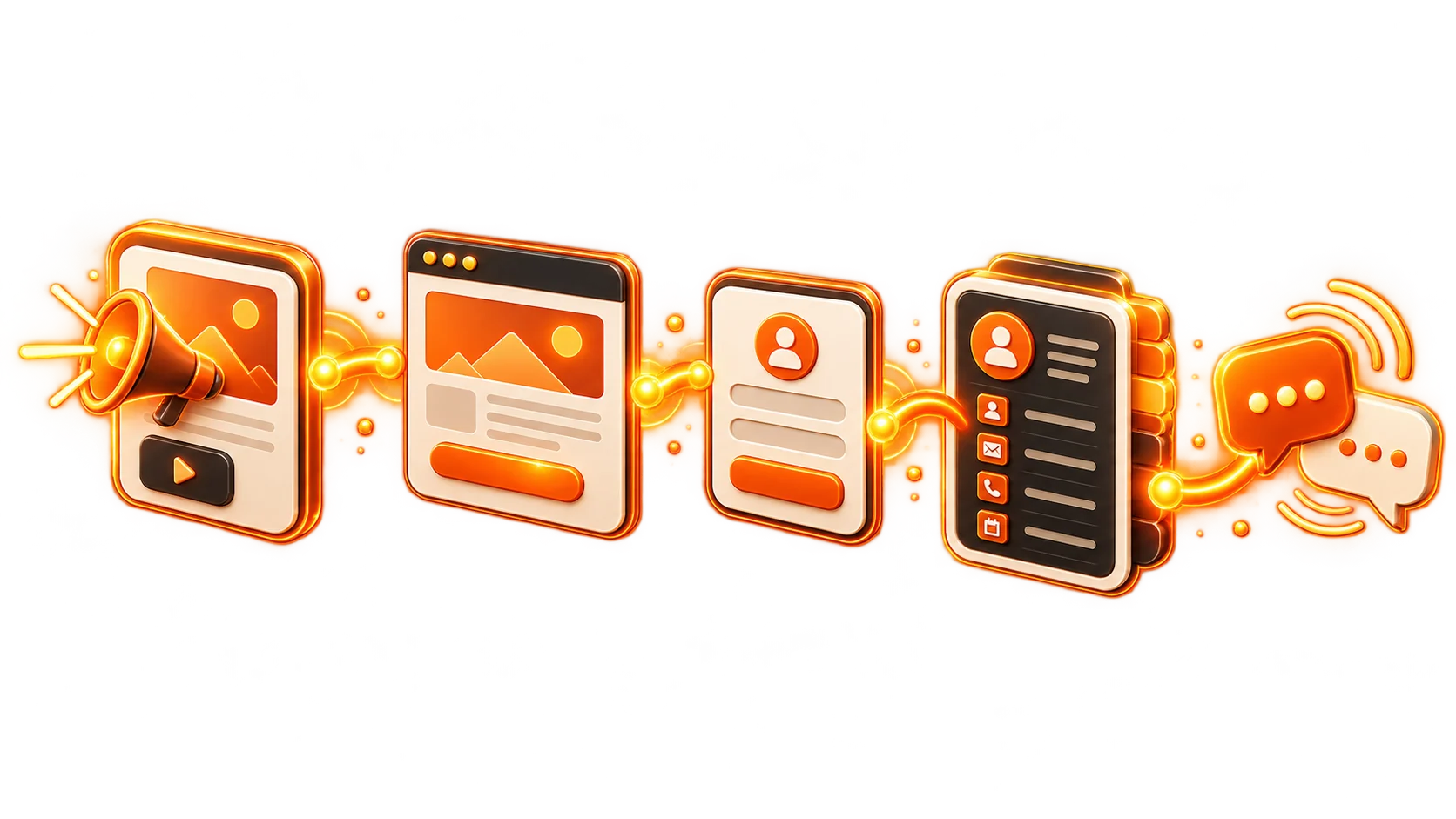
An ad worth remembering still needs to give the right person a reason to act. A useful campaign explains the offer, makes its promise credible and leads the audience toward a clear next step, rather than stopping at recognition.
Why campaigns lose momentum after the ad
Campaigns often underperform because creative, targeting, landing pages and follow-up are built in separate silos. The ad catches attention, but the destination drops the message. A form captures a lead, but the CRM gives sales little help responding quickly. Each disconnected step weakens what came before it.
Plan one connected conversion journey
- Choose one main conversion goal to guide the campaign.
- Test a focused set of strong creative ideas instead of spreading effort across weak variations.
- Continue the ad's promise on a landing page that matches buyer intent.
- Feed retargeting, CRM progression and sales insights into the next round of improvements.
Connect awareness to a buying decision
A campaign has to work through the space between discovery and decision. People might first meet your brand through search, social media, an advertisement, a referral or email. The business result depends on what follows: relevant messaging, a trustworthy page and a follow-up experience that makes action feel straightforward.
BrandBlasting brings content, design, traffic, CRM, automation and reporting into the same system. Each part should strengthen the next stage of the journey. That approach lets an article, campaign or page contribute to visibility, buyer education, retargeting, sales conversations and long-term confidence in the brand, rather than functioning as an isolated task.
Answer these questions before changing the campaign
- Who should this campaign help, and what business problem are they facing?
- What should they understand or believe after engaging with the message?
- What examples, proof or process details would make that message credible?
- What would help them next: another guide, a service page, an audit, a booked call or a discussion with sales?
How BrandBlasting plans acquisition
BrandBlasting treats paid acquisition as a system. Google and Bing help capture demand, while Meta helps create and warm it. Landing pages, tracking and CRM follow-up then connect that demand with real opportunities. The campaign becomes stronger when each channel understands the role it plays.
Measure what the campaign moves forward
Different channels require different measures, but reporting should go beyond activity. Follow engaged visits, scroll depth, CTA clicks, form starts, booked calls, assisted conversions, CRM stage changes, reply quality and feedback from sales. Attention that never helps a buyer advance is a signal to refine the strategy or the conversion path.
Qualitative information is equally useful. Audience questions, comments, objections and recurring sales conversations show where the message is unclear. The words customers use can guide a better explanation in your next page, creative concept or automated follow-up.
Map the journey before scaling the spend
Before a larger launch, map how someone moves from impression to lead, booked call and sale. That view helps identify the real priority: a stronger creative angle, more relevant targeting, clearer page copy, a simpler form or better sales follow-up. Improve the weak step before adding more pressure.
For acquisition campaigns connected to leads and sales, explore online paid ads or funnel development.