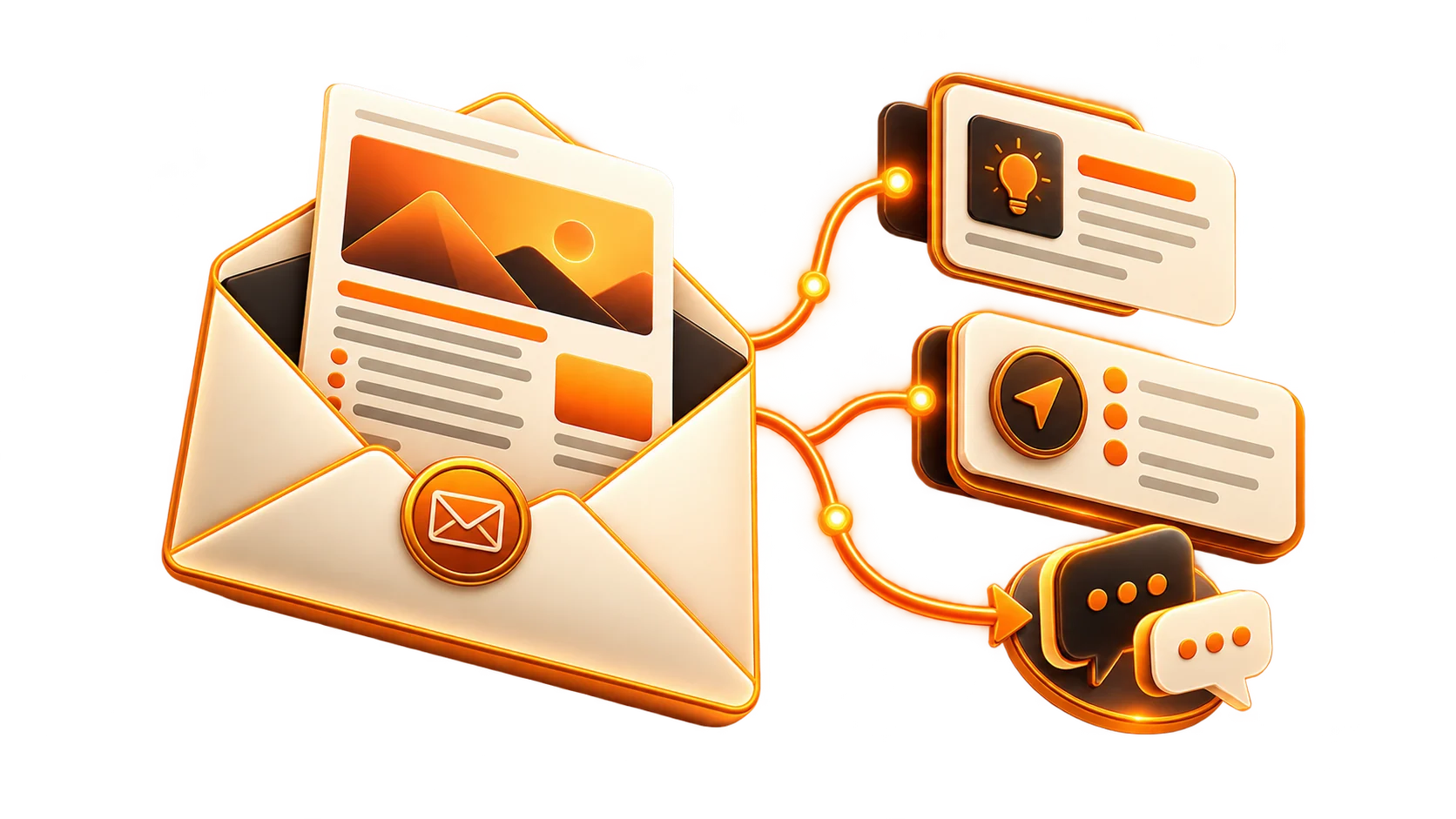
A B2B newsletter needs a better job than simply appearing in the inbox. It should make your expertise useful, keep your offer memorable and help the right buyer recognize when a conversation with your team would be worthwhile.
Why newsletter purpose matters
Business newsletters often fall into two traps: constant promotion or content so broad that it says little. A company update and a handful of links are not a sales process. Without attention to buyer intent, objections, timing and follow-up, even regular editions can struggle to move a relationship forward.
Give each edition a clear role
- Build the edition around one useful insight or a specific business challenge.
- Follow a simple sequence: explain the insight, show an example, suggest an action and offer the next step.
- Segment readers where possible, so the message fits their situation.
- Connect clicks and replies with CRM stages and a practical sales follow-up.
Help readers progress toward a decision
A newsletter often does its best work after someone knows your name but before they are ready to buy. Whether the first visit came from search, social media, an ad, a referral or email, the next interaction still has to earn attention. Relevant advice, a trustworthy experience and an easy follow-up path keep that relationship moving.
BrandBlasting connects content, design, traffic, CRM, automation and reporting rather than treating them as separate deliverables. Each should support the buyer's following step. Working together, the same newsletter or guide can build visibility, educate a prospect, support retargeting, inform a sales conversation and strengthen long-term confidence in your brand.
Questions to settle before changing the format
- Which readers are we helping, and which business problem is on their mind?
- What should they understand or believe after reading this edition?
- Which examples, evidence or details would make the message more trustworthy?
- What would help them next: a related guide, a service page, an audit, a booked call or a conversation with sales?
The BrandBlasting perspective
BrandBlasting sees newsletter design as part of lifecycle marketing. The experience should be readable on mobile and make action straightforward. Its strategy should build trust and demand, support retargeting and create useful CRM signals, rather than treating opens as the final measure of success.
Track useful buying signals
Measures differ by channel, but surface activity is only the starting point. Review engaged visits, scroll depth, CTA clicks, form starts, booked calls, assisted conversions, CRM stage changes, reply quality and sales-team feedback. When content gets attention without advancing the buyer's understanding or next action, revisit the strategy behind it.
Make room for qualitative signals as well. Replies, questions, objections and recurring sales conversations expose what readers still need to know. Their language can guide clearer pages, more relevant campaigns and follow-ups that answer the right concern at the right time.
Choose the newsletter's job first
Decide whether the newsletter primarily educates prospects, reactivates contacts, creates product demand, retains clients or equips sales. That purpose should determine its design, publishing rhythm, content choices and call to action. A deliberate role makes the format easier to judge and improve.
Need a more organized system behind your email follow-up? Explore CRM strategy and setup or funnel development.