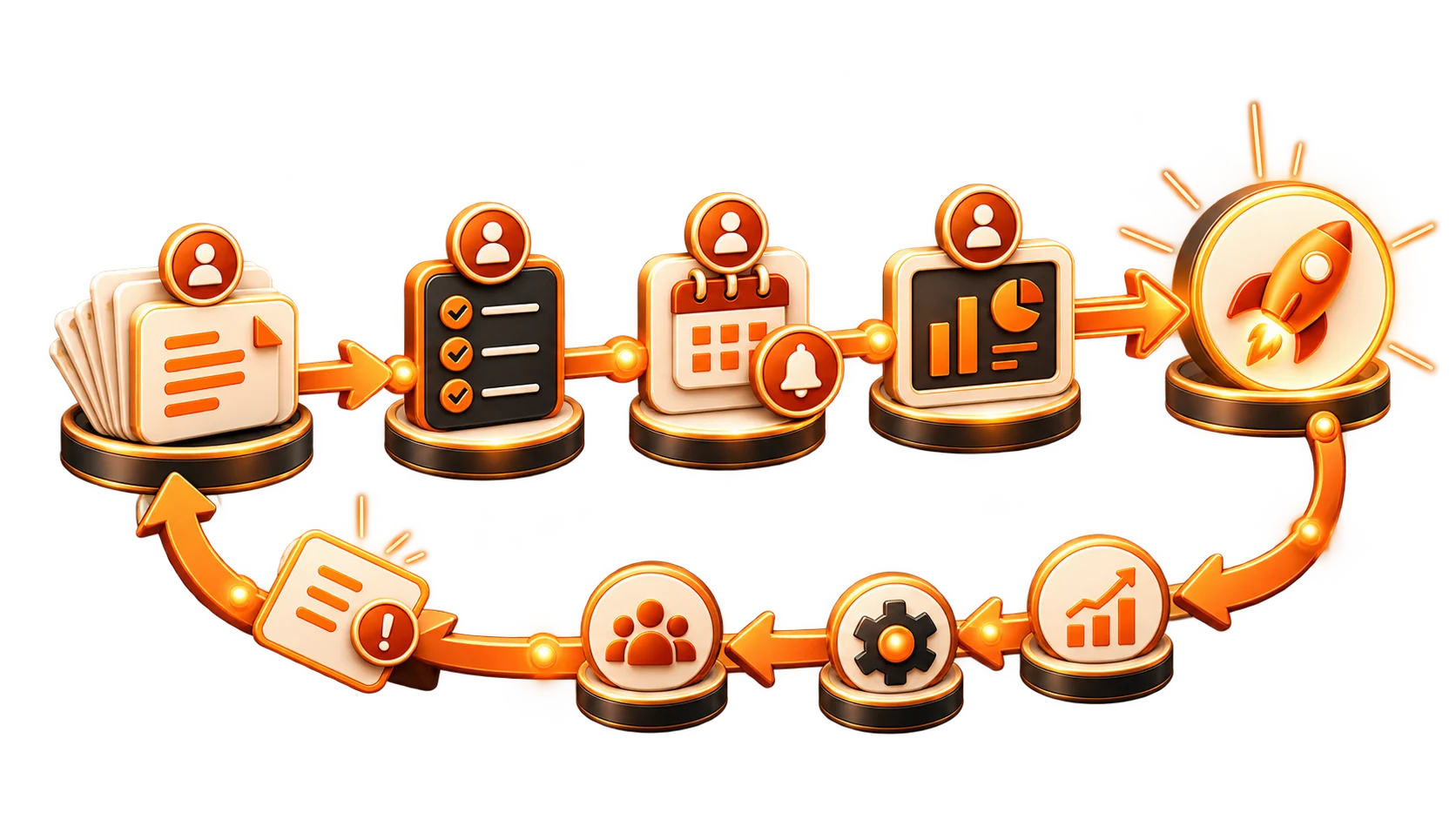
Good ideas do not keep marketing moving by themselves. Momentum comes from a working system that carries decisions, content, campaigns, follow-up and reporting through to completion at the right time.
Where disorganized execution costs progress
Work scattered across meetings, messages, spreadsheets and individual memory is easy to lose. Posts slip, leads wait, campaigns launch before tracking is ready and reports arrive too late to inform the decision. The issue is often the workflow, not a shortage of ideas.
Create an operating rhythm the team can use
- Give content, campaigns, approvals, launches and reporting a clearly named owner.
- Use calendars and workflows that make blockers visible before they become missed deadlines.
- Automate practical reminders, handoffs, lead routing and reporting tasks.
- Keep the process simple enough to become part of the team's weekly work.
Connect delivery to the customer journey
Reliable execution helps carry the buyer from awareness toward a decision. Search, social, advertising, referrals and email may create the first contact. A relevant message, a trustworthy page and timely follow-up then determine whether that interest has an easy path to action.
BrandBlasting treats content, design, traffic, CRM, automation and reporting as connected parts of that journey. Each should support what follows. With those parts working together, a page, article or campaign can improve visibility, educate buyers, support retargeting, inform sales discussions and build trust over the longer term.
Resolve the purpose before adding more tools
- Who should this work help, and which business problem should it solve?
- What should someone understand or believe after engaging with it?
- Which evidence, examples or process details would make the message easier to trust?
- What next step helps most: a related guide, a service page, an audit, a booked call or a sales conversation?
How BrandBlasting organizes connected execution
BrandBlasting brings CRM strategy, AI automation and marketing operations together to reduce the need for last-minute chasing. Adding software is not the objective. Building a clearer, more dependable rhythm for the work is.
Check whether the workflow moves buyers forward
Choose measures for the channel, then look beyond the activity totals. Engaged visits, scroll depth, CTA clicks, form starts, booked calls, assisted conversions, CRM stage changes, reply quality and sales-team feedback can reveal useful progress. If attention does not become movement, revisit the strategy behind the workflow.
Listen for patterns in comments, customer questions, objections and recurring sales discussions. These qualitative signals often reveal where your next page, campaign or automation needs a clearer explanation or a better handoff.
Start with one repeatable process
Choose a recurring workflow such as publishing campaigns or following up with leads. Map each step, clarify who owns it and use automation only where it removes avoidable work or delays.
Create a more dependable execution system with AI automation and CRM strategy and setup.